 EN

What Should Buyers Know Before Ordering Living Room Rugs?
2026/11/02
Struggling to choose the right living room rugs? Avoid costly mistakes with expert insights on size, material, durability, style & care. Get your perfect rug.
Selecting the right playpen mat involves understanding the safety standards and certifications that protect your child. Parents often focus on comfort and design, yet the underlying safety requirements are equally critical. A quality playpen mat must meet multiple regulatory benchmarks to ensure it provides a secure, non-toxic environment for babies and toddlers during play and rest periods.
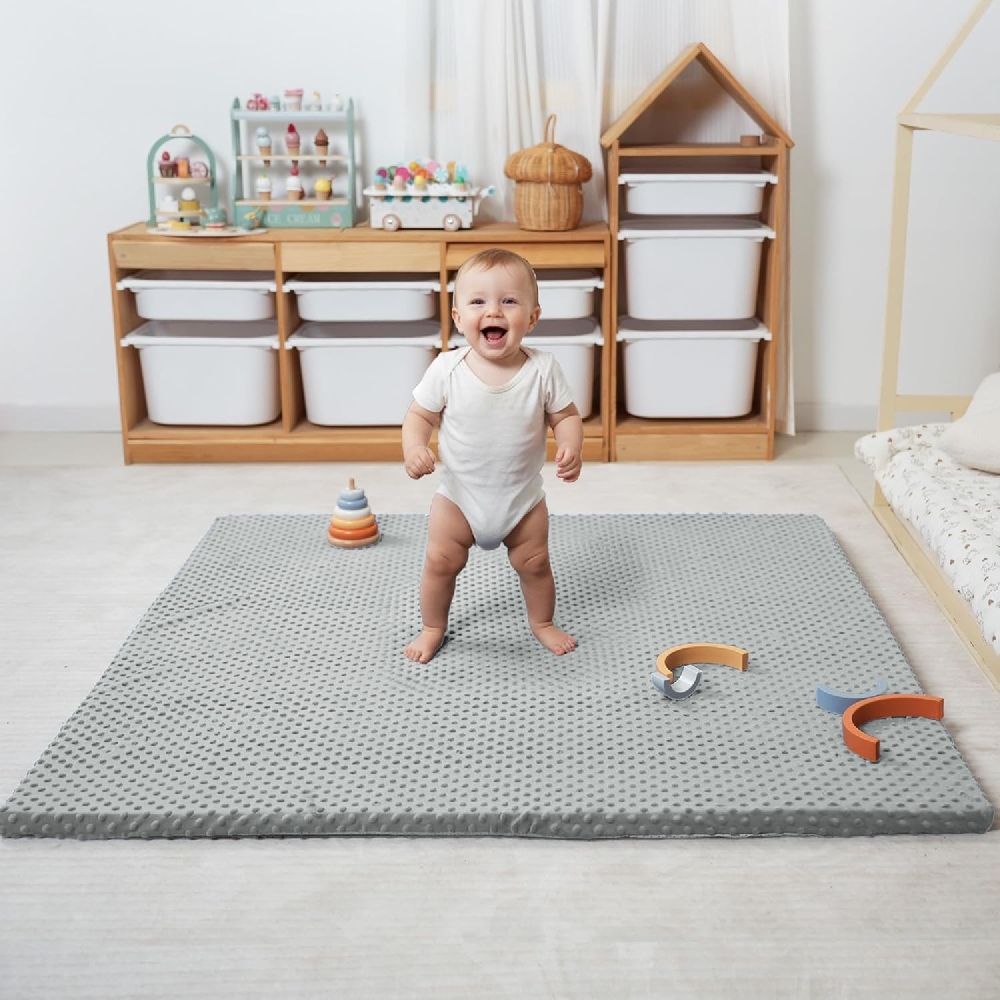
Understanding playpen mat safety standards helps you make informed purchasing decisions and avoid products that may pose health risks. Different regions enforce distinct regulations, and manufacturers must comply with these requirements to sell their products legally. This guide explores the essential certifications, material safety requirements, and performance specifications that a trustworthy playpen mat should satisfy.
The Consumer Product Safety Commission (CPSC) sets mandatory safety standards for baby products in the United States. A compliant playpen mat must meet ASTM F2050, which specifies performance requirements for non-full-size baby play yards and accessories. This standard addresses firmness, thickness, flammability, and dimensional stability to prevent entrapment hazards and structural failure during extended use.
Manufacturers must test their playpen mat designs to confirm they withstand repeated use without degradation. The standard also defines how seams, zippers, and fabric edges should be constructed to eliminate pinching points. Products bearing the CPSC mark have undergone third-party laboratory testing and verification, providing documented evidence of compliance with federal safety requirements.
In Europe, the playpen mat must comply with EN 12220 standards for baby care articles and related products. Products sold within the European Union require CE marking, which indicates the manufacturer has assessed and documented compliance with applicable safety directives. These standards cover chemical safety, mechanical hazards, flammability, and allergen content to protect young children from contamination and injury.
The CE marking process involves rigorous testing of the playpen mat materials, construction methods, and finished product performance. Manufacturers must maintain technical documentation files demonstrating how each safety requirement was addressed during design and production. This regulatory framework ensures consistent safety levels across member states and builds consumer confidence in product quality.
A safe playpen mat must be free from harmful chemicals including phthalates, heavy metals, and volatile organic compounds (VOCs). Leading playpen mat manufacturers use non-toxic foam cores, polyester covers, and water-based adhesives to minimize off-gassing and skin contact with dangerous substances. Testing for restricted substances is mandatory under CPSC regulations and includes lead, cadmium, and other heavy metals that can accumulate in a child's body over time.
Certification bodies test the playpen mat by extracting samples and analyzing them for chemical residues. Products that meet safety standards carry test reports documenting chemical concentrations well below regulatory thresholds. Parents should request certificates of analysis from manufacturers to verify that their chosen playpen mat has undergone independent chemical testing and passed.
The playpen mat fabric and foam core should be hypoallergenic and formulated to minimize allergic reactions. Natural materials like organic cotton covers reduce irritant exposure, while closed-cell foam prevents bacterial growth and dust mite proliferation. Standards require that all dyes, finishes, and waterproofing treatments used in the playpen mat must not trigger skin sensitivities or respiratory issues in sensitive children.
Antimicrobial treatments applied to the playpen mat should not use harmful chemicals. Safe methods involve silver ion technology or physical barriers rather than chemical biocides that persist in the environment. Quality manufacturers disclose the specific antimicrobial approach used and provide evidence that treated playpen mat surfaces remain effective after repeated washing cycles.
The playpen mat must maintain consistent firmness across its surface to support the baby's developing body and prevent uneven pressure points. ASTM standards specify indentation force deflection (IFD) measurements to ensure the playpen mat foam does not compress excessively or create divots that could trap small limbs. A properly designed playpen mat resists permanent deformation after months of daily use and repeated contact stress.
Testing laboratories measure the playpen mat's recovery time after compression to verify it springs back fully without permanent set. This durability requirement ensures that the playpen mat provides long-term support for successive children or extended use within a single family. Foam quality directly impacts the playpen mat's ability to meet these specifications, making material selection a critical manufacturing decision.
The playpen mat must meet flammability standards that limit ignition risk and flame spread in accidental contact with heat sources. Both the fabric cover and foam core must pass specific burn tests defined in CPSC guidelines. A compliant playpen mat will not ignite easily or produce rapid flame propagation that could create a dangerous situation in the nursery.
Manufacturers achieve fire resistance through inherently flame-resistant materials or approved chemical treatments applied to the playpen mat surface. Modern formulations avoid brominated flame retardants in favor of halogen-free alternatives that maintain safety without introducing additional toxins. Testing includes multiple trials on representative playpen mat samples to establish that flame resistance is reliable across production batches.
When evaluating a playpen mat, request certification documentation directly from the seller or manufacturer. Legitimate companies maintain copies of CPSC compliance letters, ASTM test reports, and chemical analysis certificates. A playpen mat seller who cannot quickly provide this documentation may be selling non-compliant products that pose safety risks to your child.
Check that the playpen mat label displays clear markings for CPSC compliance in North America or CE marking in Europe. These visual indicators confirm the product has undergone required safety testing and met regulatory benchmarks. Third-party certifications from independent laboratories provide additional assurance that the playpen mat was tested by unbiased evaluators using standardized procedures.
Examine the playpen mat seams, zippers, and edge finishing to ensure no sharp points, loose threads, or choking hazards are present. Quality construction directly impacts both safety and longevity, ensuring the playpen mat maintains structural integrity through years of use. A well-made playpen mat will have reinforced stitching, quality fasteners, and secure edge binding that resists separation and fraying.
The playpen mat should feature removable, washable covers that can be easily sanitized without damaging the foam core or affecting safety certifications. Removable covers extend the playpen mat's lifespan and make maintenance simpler for busy parents. Ensure that any replacement covers you purchase for the playpen mat also meet the same safety standards as the original product.
CPSC compliance means the playpen mat has been tested by an accredited laboratory to meet federal safety standards established by the Consumer Product Safety Commission. The manufacturer has verified that the playpen mat meets requirements for structural integrity, chemical safety, and flammability. Products bearing CPSC marks have undergone third-party testing, providing documented proof that the playpen mat meets all mandatory safety specifications for baby products.
Request a certificate of analysis from the playpen mat manufacturer showing the results of chemical testing performed by an independent laboratory. This document lists the concentration of restricted substances found in the playpen mat and confirms they fall below regulatory limits. Ask specifically about testing for phthalates, heavy metals, and volatile organic compounds to ensure the playpen mat you select is chemically safe for your baby.
A playpen mat maintains its safety certifications as long as it remains structurally sound and has not been modified or damaged significantly. Normal wear from use does not invalidate the original certification if the playpen mat continues to meet performance standards. However, the playpen mat should be inspected regularly for signs of deterioration, and any damaged units should be removed from service to prevent safety hazards.

2026/11/02
Struggling to choose the right living room rugs? Avoid costly mistakes with expert insights on size, material, durability, style & care. Get your perfect rug.

2026/11/03
Worried about infant falls during crawling? Discover how cushioned baby play mats absorb impact, and support motor development. Get expert safety tips now.

2026/11/04
Struggling with messy spills and tummy time needs? Discover waterproof, sensory, and tummy-time-optimized play mat surface. Compare materials now.

2026/11/05
Can a kids play mat reduce noise? Discover how thickness, foam density & full coverage deliver real acoustic relief. Get the guide.

2026/11/06
Why do kids slip on tile, laminate & polished wood? Discover how premium non-slip play mats anchor securely AND absorb impact. Boost safety.

2026/11/09
Tired of scrubbing stains and battling odors? Discover the 5 key kids play mat features—waterproof surfaces, washable covers, non-slip grip. See what makes maintenance effortless.

