 EN

What Should Buyers Know Before Ordering Living Room Rugs?
2026/11/02
Struggling to choose the right living room rugs? Avoid costly mistakes with expert insights on size, material, durability, style & care. Get your perfect rug.
Smooth floors present a significant safety challenge for children during play. Hard surfaces like tile, laminate, and polished wood offer minimal traction, increasing slip and fall risks that can result in serious injuries. Parents and caregivers often struggle to create a safe play environment without compromising their home's aesthetics or functionality. A well-designed kids play mat fundamentally transforms how children interact with smooth floor surfaces by providing engineered grip, impact protection, and stability during active play.
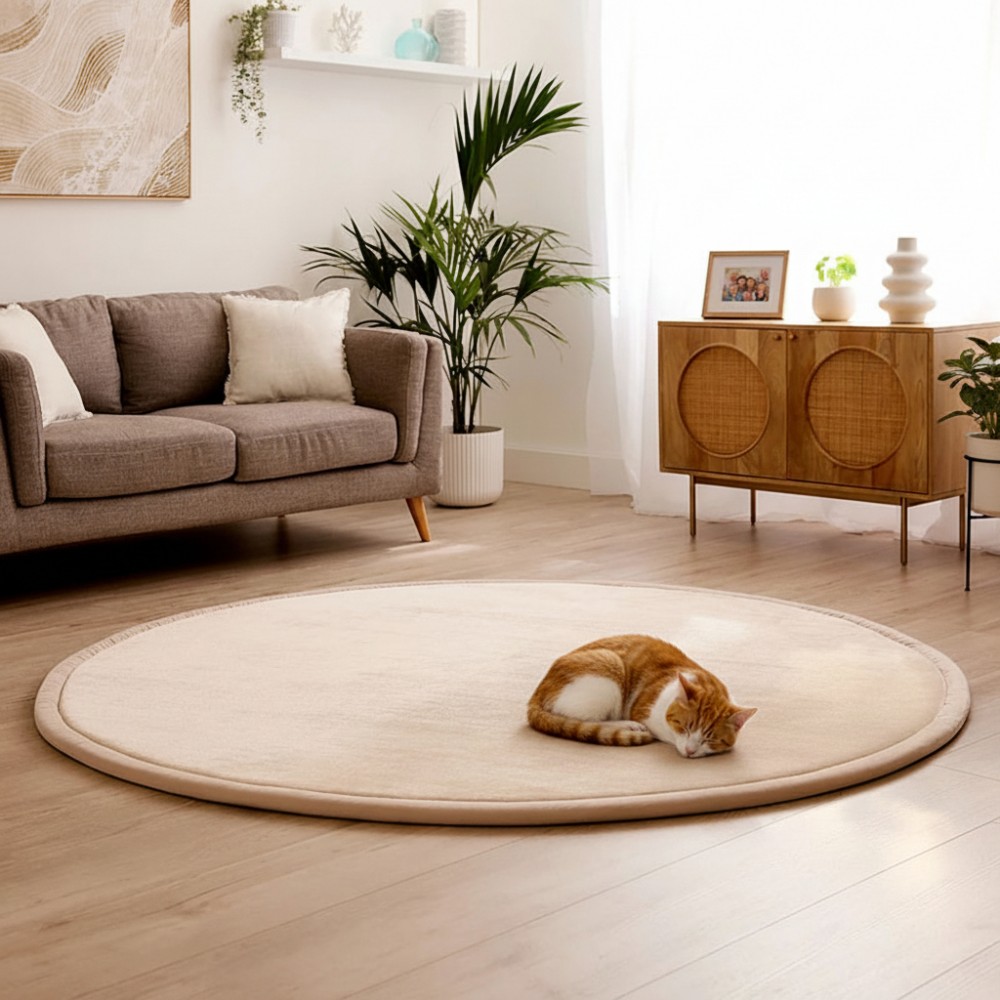
Understanding how play mats enhance grip on slippery surfaces requires examining both the material composition and the interaction between the mat's base and your flooring. Modern play surface technology combines multiple layers working together to anchor the mat firmly, reduce movement, and give children the secure footing they need for confident, active play. This article explores the specific mechanisms that make quality play mats essential for smooth floor safety and performance.
The foundation of grip begins with the mat's bottom layer. Premium non-slip play mats feature textured rubber or foam undersides designed to create maximum friction against smooth flooring. Unlike standard mats with smooth plastic bases, engineered base materials grip the floor through microscopic surface irregularities that resist sliding even under vigorous movement. When children run, jump, or pivot during play, the textured base maintains contact with the floor, preventing the mat from shifting or bunching up beneath their feet.
The specific rubber compound used in quality kids floor mats matters considerably. High-density rubber formulations provide superior grip durability, resisting degradation from moisture, sunlight, and repeated friction. This ensures the non-slip play mat maintains consistent performance over months and years of active use. Natural rubber blends often outperform synthetic alternatives on tile and laminate, while specialized formulations optimize grip on polished wood surfaces common in modern homes.
Thickness directly influences how effectively a durable play surface maintains its position on smooth floors. Thicker mats distribute a child's weight more evenly, increasing the total contact area between the mat base and the floor. This expanded footprint creates greater overall friction, preventing edge curling and mid-surface movement that compromise safety. Most quality kids play mat designs range from one to two inches thick, providing optimal balance between cushioning comfort and floor stability.
The density of the mat's core material also affects grip performance. Denser foam or rubber compositions resist deformation under dynamic play loads, maintaining consistent base contact throughout the mat's lifespan. When children concentrate their weight in one area, dense materials prevent localized sinking that would reduce grip in high-traffic zones. This engineering principle explains why premium shock absorbing play mats often perform better than budget alternatives on challenging smooth floor surfaces.
Beyond grip, the shock absorbing play mat addresses the second critical safety concern on smooth floors: impact protection. Hard flooring transmits full force from falls and jumps directly to a child's joints and spine, creating injury risks that grip alone cannot eliminate. Quality play mats incorporate multiple cushioning layers that absorb and distribute impact energy, reducing the force transmitted to small bodies. This dual function—grip plus cushioning—makes a kids floor mat far more effective than anti-slip sprays or coatings that only address traction.
The thickness and density relationship directly determines cushioning effectiveness. A thin durable play surface provides minimal shock absorption, while an overly soft mat compromises stability and grip. Modern engineering achieves the ideal balance through layered construction: a firm base for grip and stability, mid-layers of resilient foam for impact absorption, and a soft top surface for comfort. This structure allows children to play actively without the constant jarring sensation that makes thin mats unsatisfactory for extended use.
Heavy use from energetic children quickly degrades inferior play surfaces, reducing both grip and cushioning properties. A truly durable play surface maintains its protective qualities through years of daily play involving jumping, running, toys with wheels, and exposure to spills and moisture. Quality materials resist indentation, where repeated impacts create permanent depressions that compromise cushioning and create tripping hazards. Testing for indentation resistance ensures the kids play mat continues performing safely as children grow and play patterns intensify.
Moisture resistance forms another critical durability component. Spilled drinks, bathwater splash, and daily cleaning expose kids floor mats to constant moisture. Non-slip play mats with poor water resistance absorb liquid into foam cores, promoting mold growth and degrading the grip properties of base materials. Premium mats use closed-cell foam or specially treated rubber that repels moisture while remaining easy to clean. This combination preserves both the non-slip performance and structural integrity across multiple years of active household use.
Even premium non-slip play mats require correct installation to achieve maximum grip performance on smooth floors. The surface must be clean and dry before mat placement; dust, debris, and moisture films reduce friction between the base and flooring. A quick sweep and dry wipe of the intended area takes minutes but dramatically improves grip reliability. For families with particularly slippery tiles or polished wood, vacuuming followed by a damp cloth ensures optimal surface conditions for the kids play mat base.
Allowing the mat to acclimate to room temperature for several hours before use helps the base materials conform perfectly to floor irregularities. Cold mats from storage or shipping have slightly less flexible base materials, reducing initial grip effectiveness. Once acclimated, a quality shock absorbing play mat establishes stable contact across its entire surface. Periodically rotating the mat redistributes wear patterns, maintaining consistent grip performance across all zones.
Regular maintenance preserves both safety and durability of kids floor mats. Vacuuming weekly removes dust and debris that accumulate on the top surface, where they can temporarily reduce traction for bare feet. Spot cleaning with mild soap and water addresses spills before they penetrate foam layers or compromise the rubber base. A durable play surface designed with closed-cell materials prevents deep moisture absorption, allowing quick drying after cleaning without damage to grip properties.
Monthly inspection of the mat's base and edges ensures the non-slip play mat maintains firm contact with the floor. Occasionally walking the edges to press them down keeps curling from developing during storage or use. This simple maintenance routine extends the lifespan of a quality kids play mat significantly, maintaining both the grip performance and cushioning qualities that protect children during active play on smooth floors.
Smooth flooring materials like tile, laminate, and polished wood provide minimal friction for bare or sock-covered feet, especially during rapid movements like running and pivoting. The lack of surface texture means children's feet cannot generate enough traction to maintain stable contact, increasing slip probability. A quality kids play mat creates an intermediate surface with superior grip characteristics, giving small feet the secure footing needed for confident play without constant sliding risk.
Hard flooring transmits the full force of falls and impacts directly upward to children's joints and spine. A durable play surface absorbs this energy through cushioning layers, reducing the impact force by thirty to fifty percent depending on mat thickness and material quality. This protection is particularly important for toddlers and young children whose bones are still developing. Beyond grip, the shock absorbing capabilities of a non-slip play mat make it essential equipment for safe play environments over hard flooring.
Most quality non-slip play mats perform well on tile, laminate, vinyl, and sealed wood floors. However, certain formulations optimize grip on specific surfaces; rubber-based designs excel on tile, while foam-backed options work better on polished wood. Before purchasing, verify that your chosen kids play mat's base material matches your flooring type. Testing the mat in place before committing to a purchase ensures the non-slip properties meet your expectations for your particular floor surface and household conditions.

2026/11/02
Struggling to choose the right living room rugs? Avoid costly mistakes with expert insights on size, material, durability, style & care. Get your perfect rug.

2026/11/03
Worried about infant falls during crawling? Discover how cushioned baby play mats absorb impact, and support motor development. Get expert safety tips now.

2026/11/04
Struggling with messy spills and tummy time needs? Discover waterproof, sensory, and tummy-time-optimized play mat surface. Compare materials now.

2026/11/05
Can a kids play mat reduce noise? Discover how thickness, foam density & full coverage deliver real acoustic relief. Get the guide.

2026/11/09
Tired of scrubbing stains and battling odors? Discover the 5 key kids play mat features—waterproof surfaces, washable covers, non-slip grip. See what makes maintenance effortless.

