 EN

What Should Buyers Know Before Ordering Living Room Rugs?
2026/11/02
Struggling to choose the right living room rugs? Avoid costly mistakes with expert insights on size, material, durability, style & care. Get your perfect rug.
Parents and caregivers invest in a foam play mat to create safe environments where children can explore, learn, and develop motor skills. However, not all foam play mats are created equal, and understanding which safety standards your foam play mat must meet is essential for protecting your child's health and wellbeing. The right foam play mat combines comfort with rigorous safety compliance, ensuring that every surface your child touches meets established protective guidelines and regulatory requirements.
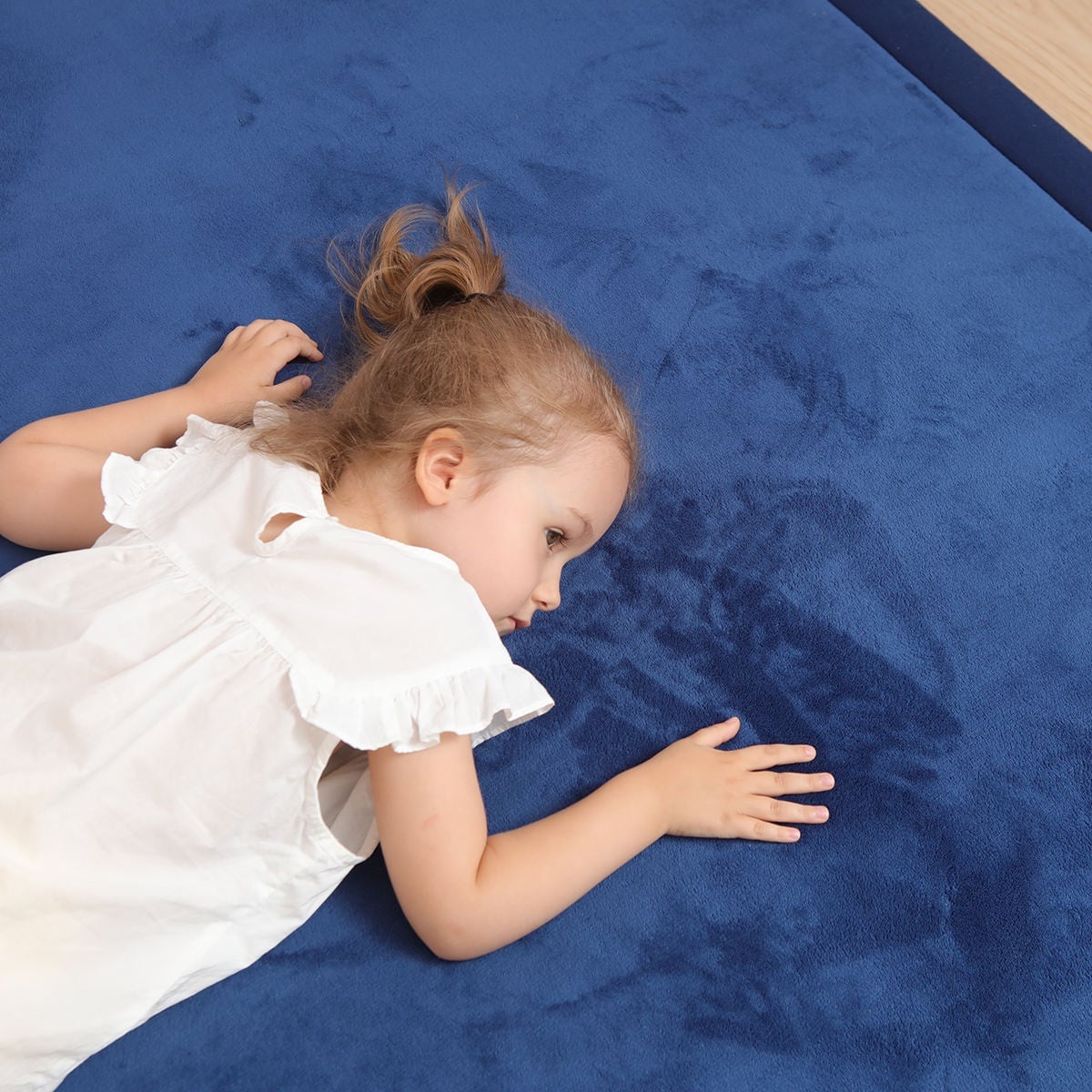
When selecting a foam play mat, compliance with international safety standards protects children from chemical exposure, physical hazards, and developmental risks. A quality foam play mat must demonstrate adherence to multiple testing protocols that evaluate material composition, construction integrity, and performance under typical use conditions. Understanding these standards empowers you to make informed decisions and confidently choose products that prioritize child safety above all else.
The Consumer Product Safety Improvement Act (CPSIA) establishes baseline safety requirements that every foam play mat sold in the United States must satisfy. Your foam play mat must pass lead and phthalate testing to ensure it contains no harmful chemical substances. These regulations specifically limit the concentration of hazardous materials that could leach into a child's system through prolonged contact or mouthing behavior, making chemical safety a non-negotiable requirement for any foam play mat product.
CPSIA compliance means your foam play mat has been tested for restricted phthalates, lead content, and other regulated substances through accredited third-party laboratories. Manufacturers must provide certificates of compliance demonstrating that their foam play mat formulation meets these stringent limits. When evaluating a foam play mat, always request documentation confirming CPSIA certification, as this is the foundational safety requirement across North American markets.
The American Society for Testing and Materials (ASTM) develops technical standards that define how a foam play mat should perform across various safety dimensions. ASTM F963 specifically addresses toy safety, while other ASTM protocols evaluate foam resilience, surface flammability, and durability under stress conditions. Your foam play mat must pass ASTM flammability tests to ensure the foam core and fabric covering resist ignition and limit flame spread if exposed to high temperatures or open flames.
Beyond ASTM standards, international markets require that a foam play mat meet regional specifications such as CE marking in Europe or AS/NZS standards in Australia. These testing frameworks evaluate whether your foam play mat maintains structural integrity after repeated compression, resists bacterial growth in the foam core, and provides adequate cushioning without breaking down into small particles. Meeting multiple international standards signals that your foam play mat has undergone comprehensive third-party validation and maintains consistent safety performance across different regulatory regions.
The foam core of your foam play mat must be formulated using non-toxic materials that do not release volatile organic compounds (VOCs) during normal use or storage. Low-VOC foams reduce off-gassing events where chemical vapors escape into the surrounding air, protecting children from respiratory irritation and chemical exposure. Your foam play mat should be manufactured using closed-cell foam technology or materials certified under strict VOC emission standards like GreenGuard Gold, which limits chemical release to levels safe for children's continuous exposure.
Manufacturers must test whether their foam play mat releases formaldehyde, benzene, or other harmful VOCs under temperature variations and humidity changes typical in home environments. A quality foam play mat will feature documentation showing VOC emission test results from independent laboratories, confirming that off-gassing remains within safe thresholds. This testing ensures your foam play mat can be safely placed in any room where children spend extended periods without causing health complications.
The fabric covering on your foam play mat must meet textile safety standards that evaluate dye stability, colorfast properties, and potential skin irritation. Textiles used in children's products undergo testing to ensure dyes do not transfer to skin through friction or moisture exposure, reducing allergy and dermatitis risks. Your foam play mat's covering should be certified under OEKO-TEX Standard 100 or similar textile safety protocols that comprehensively test for azo dyes, heavy metals, and other chemical residues in fabric materials.
Surface coverings on your foam play mat must also resist bacterial and fungal growth, particularly in high-moisture environments where children play. Many manufacturers treat their foam play mat fabric with antimicrobial agents or use materials naturally resistant to microbial colonization. The covering should be evaluated for durability through abrasion testing, ensuring your foam play mat withstands regular cleaning cycles and extended use without degrading into fibers that pose choking or inhalation risks.
Your foam play mat must demonstrate appropriate firmness and shock absorption properties to provide adequate fall protection while supporting proper spinal alignment during play. Testing protocols measure foam resilience by assessing how quickly the foam play mat rebounds after compression, ensuring it maintains structural integrity rather than becoming permanently deformed. A properly designed foam play mat should compress under a child's weight but return to original shape within a specific timeframe, preventing the formation of pressure points or inadequate support areas.
Fall protection standards define minimum foam thickness and density requirements that your foam play mat must satisfy to adequately cushion impacts from typical play activities. Testing involves dropping weighted objects from defined heights onto the foam play mat surface and measuring force transmission to evaluate impact absorption. Your foam play mat should meet or exceed these energy absorption benchmarks, documented through standardized testing protocols that simulate real-world play scenarios and ensure child safety during active use.
Your foam play mat must withstand accelerated wear testing that simulates extended use patterns without developing small particle breakaway hazards. Durability testing evaluates whether seams remain intact, surface coverings maintain barrier integrity, and foam core does not delaminate or fragment under normal play stress. A quality foam play mat should pass tensile strength testing and seam failure resistance protocols, ensuring joints remain bonded and the covering does not tear easily to expose underlying foam materials.
Compression set testing measures whether your foam play mat permanently deforms after extended sitting or repeated impacts, which could compromise fall protection effectiveness and create uncomfortable surface irregularities. Standards define maximum acceptable permanent deformation percentages, ensuring your foam play mat maintains performance properties throughout its expected product lifespan. Regular durability testing confirms your foam play mat will provide consistent safety benefits across months or years of typical household use.
The most critical certifications include CPSIA compliance for lead and phthalate testing, ASTM F963 for general toy safety, OEKO-TEX Standard 100 for textile safety, and GreenGuard Gold for VOC emissions. These certifications together verify that your foam play mat meets chemical safety, material testing, and performance standards across multiple dimensions. Always request third-party test certificates from the manufacturer before purchasing, confirming your foam play mat has undergone independent validation from accredited laboratories.
While safety standards comprehensively test for regulated chemicals, individual children may experience allergic or sensitivity reactions to materials that pass standardized testing. Some children have sensitivities to latex, rubber, or specific dyes that are chemically acceptable but personally problematic. If your child develops rashes or respiratory symptoms after contact with a foam play mat, consult a pediatrician and consider hypoallergenic alternatives with certifications specifically addressing common allergens and skin irritation potential.
Most foam play mats maintain safety performance for three to five years with regular care and cleaning, though durability depends on use intensity and material quality. You should inspect your foam play mat regularly for signs of deterioration, including permanent compression areas, tears in covering, or visible foam breakdown. If your foam play mat shows structural damage, develops persistent odors suggesting bacterial growth, or displays permanent deformation, replacement is recommended to ensure continued child safety and fall protection effectiveness.

2026/11/02
Struggling to choose the right living room rugs? Avoid costly mistakes with expert insights on size, material, durability, style & care. Get your perfect rug.

2026/11/03
Worried about infant falls during crawling? Discover how cushioned baby play mats absorb impact, and support motor development. Get expert safety tips now.

2026/11/04
Struggling with messy spills and tummy time needs? Discover waterproof, sensory, and tummy-time-optimized play mat surface. Compare materials now.

2026/11/05
Can a kids play mat reduce noise? Discover how thickness, foam density & full coverage deliver real acoustic relief. Get the guide.

2026/11/06
Why do kids slip on tile, laminate & polished wood? Discover how premium non-slip play mats anchor securely AND absorb impact. Boost safety.

2026/11/09
Tired of scrubbing stains and battling odors? Discover the 5 key kids play mat features—waterproof surfaces, washable covers, non-slip grip. See what makes maintenance effortless.

