 EN

What Should Buyers Know Before Ordering Living Room Rugs?
2026/11/02
Struggling to choose the right living room rugs? Avoid costly mistakes with expert insights on size, material, durability, style & care. Get your perfect rug.
Selecting the right tummy time mat is one of the most important decisions you'll make for your baby's physical development. During the first months of life, tummy time helps infants build essential strength in their neck, shoulders, and core muscles. This foundation is critical for achieving major developmental milestones like rolling over, crawling, and eventually walking. However, not all mats provide the same level of comfort, safety, and developmental support. Understanding what makes a quality tummy time mat will help you choose a product that truly benefits your baby.
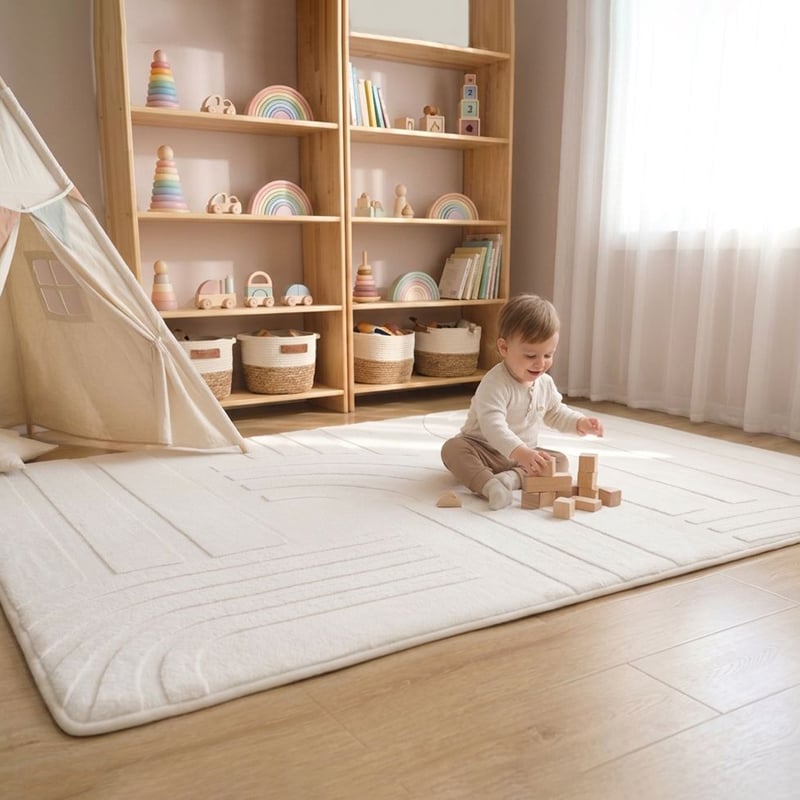
A quality tummy time mat serves multiple functions beyond simple comfort. It provides a designated space where your baby can safely explore movement, encourages sensory engagement, and creates a consistent routine. When shopping for a tummy time mat, you'll encounter various materials, sizes, and designs. Each option has specific advantages depending on your home environment, your baby's age, and your development priorities. This guide walks you through the essential factors that distinguish a truly beneficial mat from a generic floor covering.
The material of your tummy time mat directly affects your baby's comfort and safety during developmental sessions. Premium tummy time mat options typically use soft, non-toxic fabrics that are gentle on delicate skin. Natural fibers like cotton blends, organic materials, or high-quality faux fur provide superior softness while maintaining breathability. These materials prevent heat buildup, which is crucial during extended tummy time periods. Avoid mats made from synthetic materials that trap moisture or contain chemical odors, as these can irritate your baby's skin and respiratory system.
Any tummy time mat you consider should meet established safety standards for baby products. Look for certifications indicating the mat has been tested for harmful substances like heavy metals, phthalates, and formaldehyde. Reputable manufacturers provide documentation showing their tummy time mat complies with safety regulations such as CPSIA or ASTM standards. The mat's construction should feature secure stitching and reinforced edges to prevent fraying or small parts from becoming a choking hazard. Additionally, verify that any attached toys, mirrors, or sensory elements are firmly secured and age-appropriate.
Proper cushioning transforms a tummy time mat from a basic surface into a genuine developmental tool. Infants need adequate padding to protect their developing joints and prevent discomfort that might discourage them from staying on the mat. A high-quality tummy time mat typically features between half an inch to one inch of cushioning, depending on the base material. This thickness provides enough support to reduce strain on your baby's neck and shoulders without being so soft that it creates an unstable surface. Test the firmness by pressing your hand into the mat—it should compress slightly but return to shape quickly.
The dimensions of your tummy time mat should accommodate your baby's current size while allowing room for movement and growth. A mat that's too small restricts your baby's range of motion, limiting the developmental benefits of the activity. Most quality options range from thirty to forty inches in length and twenty to thirty inches in width, which provides adequate space for most infants and young toddlers. Consider your home layout when selecting size—the mat should fit comfortably in areas where you spend the most time. Portability matters too, especially if you want to move your tummy time mat between rooms or take it to different locations.
Beyond basic comfort, an excellent tummy time mat incorporates sensory elements that engage your baby's developing brain. Contrasting colors, patterns, and textures encourage visual tracking skills and stimulate cognitive development. Some tummy time mat designs feature crinkle sounds, mirror elements, or varying fabric textures that provide multi-sensory feedback. These engaging features motivate babies to spend more time on the mat, naturally increasing the duration and effectiveness of their tummy time sessions. However, ensure all sensory elements are securely attached and made from baby-safe materials.
Different developmental stages benefit from different mat features. For newborns and younger infants, a simple, clean design with subtle high-contrast patterns supports visual development without overwhelming sensitive eyes. As your baby grows, additional textures and interactive elements become more beneficial. A quality tummy time mat grows with your child, offering age-appropriate engagement at different stages. Consider whether you want a mat with removable toys or adjustable elements, as these options extend the mat's usefulness over several months or years.
Babies spend considerable time on their tummy time mat, and hygiene is paramount. Select a mat with a removable, machine-washable cover if possible, as this dramatically simplifies regular cleaning. If the entire mat is washable, verify the manufacturer's recommended temperature and detergent type. Spot-cleaning capabilities are also important for immediate cleanup of spills or accidents. A quality tummy time mat should withstand frequent washing without color fading or material degradation. Check the durability specifications to ensure the mat maintains its integrity after multiple wash cycles.
Investing in a durable tummy time mat offers better long-term value than cheaper alternatives that wear out quickly. Examine the stitching quality, seam construction, and overall build. A well-made mat can be used for subsequent children or resold afterward, making the initial investment more economical. Pay attention to the manufacturer's warranty or durability guarantees. Reading customer reviews about mat performance after several months or years of use provides valuable insight into real-world longevity and value retention.
Most pediatricians recommend introducing supervised tummy time as early as the first weeks of life, starting with just a few minutes per session. A dedicated tummy time mat becomes increasingly valuable as your baby grows stronger and spends longer periods on their stomach. By three to four months, many babies can benefit from extended sessions on a quality mat that supports their developing strength and coordination.
The recommended duration increases as your baby grows. Newborns may start with just one to two minutes of supervised tummy time, gradually increasing to fifteen to thirty minutes total daily by three to six months. A comfortable, engaging tummy time mat encourages babies to stay positioned longer, naturally supporting healthy development without forcing the activity beyond what's comfortable.
Yes, regular tummy time on a supportive mat is one of the most effective ways to prevent flat spots from developing on your baby's head. When babies spend extended periods on their backs, continuous pressure on the same areas can flatten the skull slightly. A quality tummy time mat encourages your baby to spend more time in positions that relieve this pressure while strengthening neck muscles, providing both developmental and positional benefits.

2026/11/02
Struggling to choose the right living room rugs? Avoid costly mistakes with expert insights on size, material, durability, style & care. Get your perfect rug.

2026/11/03
Worried about infant falls during crawling? Discover how cushioned baby play mats absorb impact, and support motor development. Get expert safety tips now.

2026/11/04
Struggling with messy spills and tummy time needs? Discover waterproof, sensory, and tummy-time-optimized play mat surface. Compare materials now.

2026/11/05
Can a kids play mat reduce noise? Discover how thickness, foam density & full coverage deliver real acoustic relief. Get the guide.

2026/11/06
Why do kids slip on tile, laminate & polished wood? Discover how premium non-slip play mats anchor securely AND absorb impact. Boost safety.

2026/11/09
Tired of scrubbing stains and battling odors? Discover the 5 key kids play mat features—waterproof surfaces, washable covers, non-slip grip. See what makes maintenance effortless.

