 EN

What Should Buyers Know Before Ordering Living Room Rugs?
2026/11/02
Struggling to choose the right living room rugs? Avoid costly mistakes with expert insights on size, material, durability, style & care. Get your perfect rug.
When selecting a foam mat for any application, thickness represents one of the most critical performance variables that directly influences comfort, durability, and functional suitability. Understanding how foam mat thickness affects overall performance helps buyers make informed decisions that align with their specific use case, whether for playtime, exercise, or protective cushioning. The relationship between thickness and performance extends beyond simple comfort preferences, encompassing structural integrity, material longevity, and the ability to handle repeated use without premature degradation.
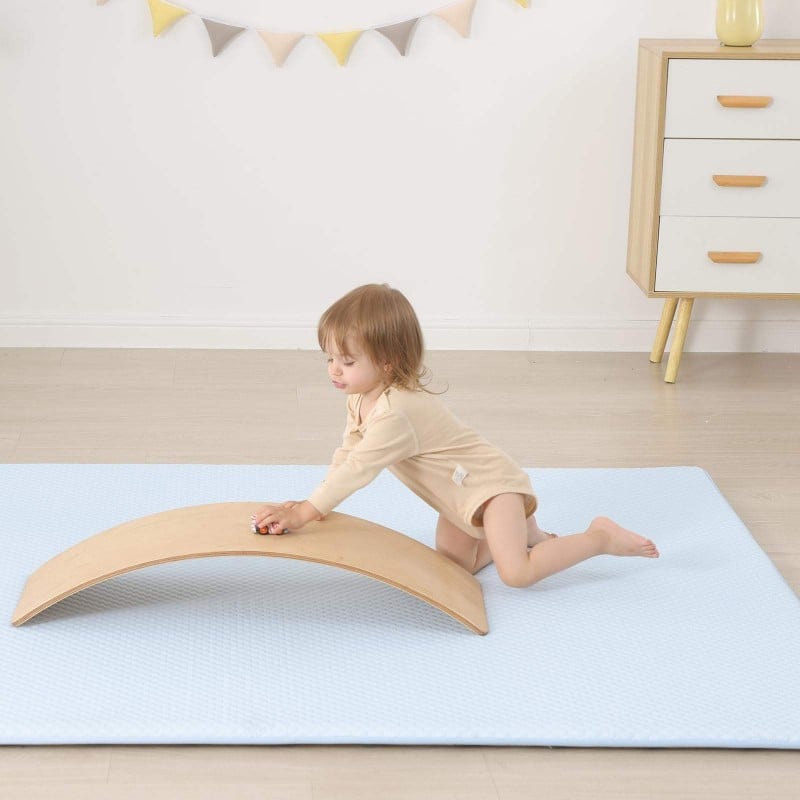
The performance characteristics of a foam mat depend significantly on material density, cell structure, and thickness dimensions working together as an integrated system. A thicker foam mat does not automatically guarantee better performance; instead, the optimal thickness varies based on intended use, expected load, frequency of use, and environmental conditions. This article explores how different thickness options translate into real-world performance differences and helps you identify the thickness range best suited to your requirements.
Foam mat thickness directly determines how much compressive force the material can absorb before reaching its base layer. Thinner foam mats, typically between 0.25 and 0.5 inches, provide minimal cushioning and suit applications where light impact protection is adequate, such as decorative underlayment or moisture barriers. Standard foam mat options in the 0.5 to 1 inch range deliver moderate comfort suitable for general playtime activities, light exercise routines, and basic protective purposes.
Premium foam mat configurations ranging from 1 to 2 inches or beyond offer superior cushioning, absorbing impact more effectively and reducing stress on joints and bones during extended use. The increased thickness allows the foam matrix to distribute force over a larger volume of material, preventing bottom-out sensations where users feel the underlying hard surface beneath the cushioning layer. This performance benefit becomes increasingly important for activities involving repetitive impact, such as gymnastics, yoga, or extended playtime sessions.
A thicker foam mat maintains structural integrity under sustained pressure more effectively than thinner alternatives. When weight is applied to a foam mat, the material compresses downward until reaching equilibrium between the applied force and the material's resistance to deformation. Thicker foam configurations can absorb more energy before fully compressing, which means users experience consistent support throughout use rather than progressive sinking sensations.
The load-bearing capacity of a foam mat increases with thickness, but this relationship is not purely linear. Material density, cell structure, and composition play equally important roles in determining total compression resistance. A high-quality foam mat with moderate thickness often outperforms a low-density foam mat with greater thickness, demonstrating that thickness alone does not define performance without considering material quality attributes.
Extended foam mat use creates permanent compression patterns as the material loses elasticity over time. Thicker foam mats develop compression indentations more slowly than thinner versions because the deformation is distributed across a larger material volume. This means a thicker foam mat typically maintains its original thickness, appearance, and support characteristics through many more use cycles before noticeable performance degradation occurs.
Thinner foam mats, while adequate for light-duty applications, can show visible compression patterns and reduced cushioning capacity relatively quickly with frequent use. The trade-off is that thicker foam mats require more material to produce, increasing manufacturing costs and product weight. Understanding the intended use intensity helps determine whether the durability benefits of greater thickness justify the added expense and handling considerations.
Foam mat thickness influences how effectively the material resists moisture penetration and maintains performance in humid or wet environments. Thicker foam mats create a more substantial barrier against ground moisture and fluid infiltration, preserving internal cell structure and preventing the breakdown that occurs when foam absorbs excessive water. A thinner foam mat may allow moisture to migrate through more readily, potentially accelerating mold growth, material degradation, and odor development.
The protective benefits of foam mat thickness extend to chemical and stain resistance as well. A thicker foam mat buffer allows more time for cleaning and drying before fluids reach deeper layers, reducing the likelihood of permanent staining or material damage. For applications in high-moisture environments or where liquid resistance is important, selecting a foam mat thickness that provides adequate protective depth becomes a practical investment in longevity.
Applications requiring portability, frequent relocation, or minimal storage space benefit from thinner foam mat options. Products in the 0.25 to 0.5 inch range remain lightweight, roll compactly, and suit temporary use cases where maximum cushioning is not essential. Yoga sessions, travel activities, and situations where a foam mat provides basic ground isolation rather than impact protection often work well with these thinner configurations.
Households with children, pets, or regular active use benefit from foam mat products in the 0.75 to 1.5 inch thickness range. This middle-ground thickness provides meaningful cushioning for tummy time, playtime, and exercise without becoming unwieldy or excessively expensive. A foam mat of this thickness maintains performance through daily use cycles, resists compression indentation, and offers genuine comfort improvement over bare flooring.
Facilities emphasizing durability, professional athletic training, or intensive daily use require thicker foam mat solutions exceeding 1.5 inches. Gyms, training centers, daycare facilities, and commercial environments benefit from the superior compression resistance and extended lifespan that premium foam mat thickness provides. The initial investment in thicker, higher-quality materials translates into lower long-term maintenance costs and sustained performance reliability across high-traffic areas.
A foam mat thickness between 0.75 and 1 inch typically delivers optimal balance for users prioritizing both comfort and practical handling. This range offers meaningful cushioning for most activities while remaining lightweight enough for reasonable portability and storage in residential spaces.
Not necessarily. A foam mat's performance depends on the combination of thickness, material density, cell structure, and composition. A high-density foam mat of moderate thickness can outperform a low-density foam mat of greater thickness in terms of support, durability, and compression resistance across typical use scenarios.
The lifespan of a foam mat varies based on thickness, quality, use intensity, and environmental conditions. A premium foam mat of appropriate thickness for its intended use typically maintains satisfactory performance for 3 to 7 years with normal household use, while thinner or lower-quality options may show noticeable compression and degradation within 1 to 2 years of regular use.

2026/11/02
Struggling to choose the right living room rugs? Avoid costly mistakes with expert insights on size, material, durability, style & care. Get your perfect rug.

2026/11/03
Worried about infant falls during crawling? Discover how cushioned baby play mats absorb impact, and support motor development. Get expert safety tips now.

2026/11/04
Struggling with messy spills and tummy time needs? Discover waterproof, sensory, and tummy-time-optimized play mat surface. Compare materials now.

2026/11/05
Can a kids play mat reduce noise? Discover how thickness, foam density & full coverage deliver real acoustic relief. Get the guide.

2026/11/06
Why do kids slip on tile, laminate & polished wood? Discover how premium non-slip play mats anchor securely AND absorb impact. Boost safety.

2026/11/09
Tired of scrubbing stains and battling odors? Discover the 5 key kids play mat features—waterproof surfaces, washable covers, non-slip grip. See what makes maintenance effortless.

