 EN

What Should Buyers Know Before Ordering Living Room Rugs?
2026/11/02
Struggling to choose the right living room rugs? Avoid costly mistakes with expert insights on size, material, durability, style & care. Get your perfect rug.
Selecting the right play mat requires understanding the distinct characteristics of available materials. Each material type offers unique advantages and trade-offs in terms of comfort, durability, safety, and maintenance. Parents, caregivers, and facility managers must weigh these factors carefully to choose a play mat that aligns with their specific environment and usage patterns. The material composition directly influences how well a play mat performs over time and how safely it protects children during active play.
Understanding play mat material differences helps you make an informed decision that prioritizes both child development and long-term value. Different environments demand different solutions, and the material foundation determines everything from impact protection to ease of cleaning and resistance to wear. This guide explores the major play mat material categories, their performance characteristics, and practical considerations for different applications.
EVA foam represents one of the most popular play mat materials for residential and commercial settings. This lightweight, non-toxic material provides excellent shock absorption while maintaining responsiveness beneath children's feet. EVA play mat options range from thin, portable sheets to thick interlocking tiles that create substantial cushioning layers. The material resists moisture absorption, making it ideal for humid environments and easy to sanitize with standard cleaning solutions.
EVA foam play mat products typically feature bright colors and simple designs, appealing to children while withstanding repeated sanitization. The material's durability extends across years of daily use when properly maintained, and the non-slip bottom surface prevents shifting during active play. However, EVA play mat pieces can develop permanent indentations under heavy point loads, and some formulations may emit slight chemical odors initially.
Rubber-based play mat materials offer superior resilience and longevity compared to many foam alternatives. Natural rubber play mat options provide excellent environmental credentials while delivering outstanding durability and flexibility. These materials return to original shape even after sustained pressure, making them ideal for high-traffic areas and commercial installations. Recycled rubber play mat products offer cost advantages and environmental benefits through material reuse.
Rubber play mat surfaces require consideration regarding heat retention and odor potential, particularly with synthetic varieties. Installation of rubber play mat flooring often demands professional assessment of subfloor conditions and moisture barriers. The material's weight means rubber play mat systems may require reinforced storage and careful positioning, but this density ensures lasting performance in demanding environments.
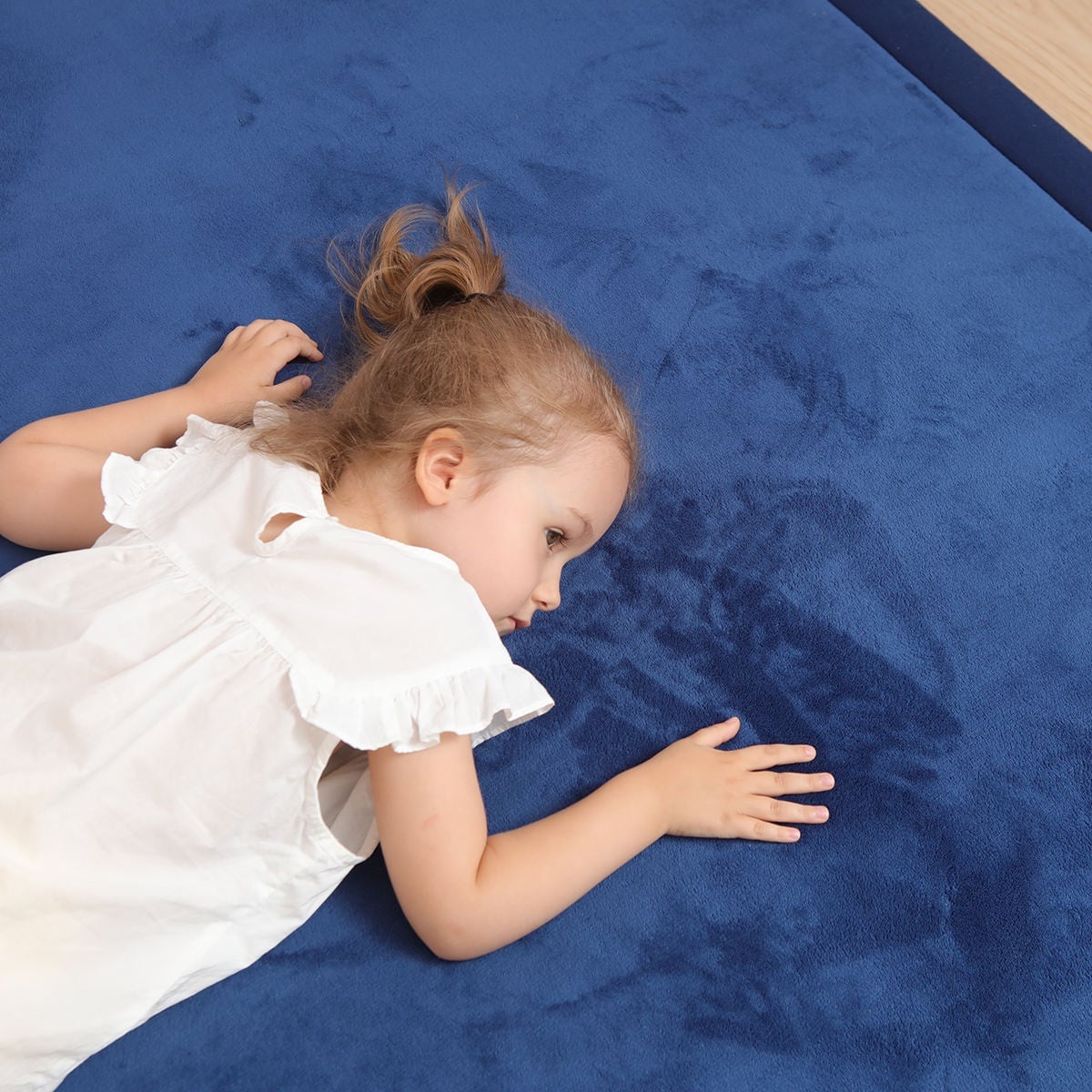
Velvet-finished play mat materials combine foam or rubber bases with soft textile coverings, creating comfort and aesthetic appeal. These play mat options feature skin-friendly surfaces that reduce friction and irritation during extended play sessions. The fabric layer adds insulation properties while maintaining breathability, preventing moisture accumulation underneath during extended use. Many premium play mat products utilize coral velvet or microfiber treatments specifically engineered for children's sensitive skin.
Velvet play mat coverings require regular vacuuming and spot cleaning to maintain appearance and hygiene standards. The textile surface of play mat products can attract dust and allergens, necessitating more frequent maintenance than solid material alternatives. However, the comfort and safety benefits often justify the additional care requirements, particularly for infants and toddlers who spend extended time on play mat surfaces.
Modern play mat engineering often combines multiple material layers to optimize performance across diverse requirements. Layered play mat construction typically includes a supportive base layer, cushioning middle section, and protective top surface. This composite approach to play mat materials balances impact protection, durability, water resistance, and user comfort. Thick play mat designs with multiple layers provide superior performance in high-impact scenarios while remaining lightweight enough for portable installation.
Composite play mat systems allow manufacturers to customize material combinations for specific use cases and age groups. A quality play mat featuring layered construction delivers lasting value by addressing multiple performance dimensions simultaneously. These hybrid play mat products often exceed single-material alternatives in both functionality and longevity, justifying premium pricing for facilities prioritizing safety and durability.
Quality play mat materials must meet rigorous safety certifications and toxicity standards established by regulatory bodies. EVA foam play mat products should comply with ASTM standards and include phthalate-free formulations for children's safety. Reputable play mat manufacturers conduct third-party testing to verify material composition and confirm absence of harmful substances. Understanding material certifications helps parents and facility managers confidently select play mat options that prioritize child health.
Different play mat materials carry distinct certification requirements and compliance documentation. Rubber play mat products typically carry natural rubber certifications or recycled content verification. The play mat material safety profile directly impacts purchasing decisions, particularly for parents with children prone to skin sensitivities or respiratory concerns. Always verify play mat material documentation before finalizing purchase decisions for your specific environment.
Different play mat materials demand distinct maintenance protocols to ensure longevity and hygiene standards. EVA play mat surfaces require regular vacuuming and occasional damp mop treatment with mild soap solutions. Rubber play mat products resist staining better than fabric-covered alternatives but may require specialized cleaners for stubborn marks. Velvet play mat coverings need gentle brushing and spot cleaning rather than immersion or pressure washing.
Evaluating long-term maintenance costs helps determine true value across play mat material types. While budget play mat options may seem economical initially, poor durability and high maintenance requirements increase total cost of ownership. Premium play mat materials with superior stain resistance and simplified cleaning procedures often deliver better financial returns across multi-year ownership. Consider your facility's cleaning capacity and budget when selecting appropriate play mat material for your situation.
Soft, skin-friendly play mat materials like coral velvet or microfiber coverings provide optimal comfort for very young children. Layered foam or rubber play mat construction underneath ensures adequate cushioning for developmental activities and fall protection. Look for play mat options featuring non-toxic certifications and smooth surfaces free from rough textures that could irritate sensitive skin. Thick play mat designs offer superior support during crawling and early standing activities, making them ideal for infants.
Quality EVA foam play mat products typically last 3-5 years with proper maintenance and moderate use. Rubber-based play mat materials often exceed 5-10 years due to superior resilience and natural material properties. Premium play mat options with multiple layers and protective coverings can reach 7-15 years of reliable performance depending on usage intensity. Maintenance consistency dramatically impacts play mat lifespan, with well-cared-for products lasting significantly longer than neglected alternatives.
Premium play mat products typically offer superior durability, safety certifications, and maintenance simplicity compared to budget alternatives. However, selecting appropriate play mat material for your specific needs matters more than simply choosing the most expensive option available. A moderately priced play mat engineered specifically for your environment often delivers better value than premium products designed for different applications. Evaluate play mat materials based on your facility's usage patterns, safety requirements, and maintenance capacity rather than price alone.

2026/11/02
Struggling to choose the right living room rugs? Avoid costly mistakes with expert insights on size, material, durability, style & care. Get your perfect rug.

2026/11/03
Worried about infant falls during crawling? Discover how cushioned baby play mats absorb impact, and support motor development. Get expert safety tips now.

2026/11/04
Struggling with messy spills and tummy time needs? Discover waterproof, sensory, and tummy-time-optimized play mat surface. Compare materials now.

2026/11/05
Can a kids play mat reduce noise? Discover how thickness, foam density & full coverage deliver real acoustic relief. Get the guide.

2026/11/06
Why do kids slip on tile, laminate & polished wood? Discover how premium non-slip play mats anchor securely AND absorb impact. Boost safety.

2026/11/09
Tired of scrubbing stains and battling odors? Discover the 5 key kids play mat features—waterproof surfaces, washable covers, non-slip grip. See what makes maintenance effortless.

