 EN

What Should Buyers Know Before Ordering Living Room Rugs?
2026/11/02
Struggling to choose the right living room rugs? Avoid costly mistakes with expert insights on size, material, durability, style & care. Get your perfect rug.
Manufacturers today face growing demand from retailers and parents seeking unique, personalized play mats for babies that stand out in a competitive market. Customization has become a critical differentiator, allowing brands to create products that align with specific design aesthetics, safety standards, and functional requirements. Understanding the customization landscape helps manufacturers develop play mats that meet exact customer specifications while maintaining production efficiency and cost effectiveness.
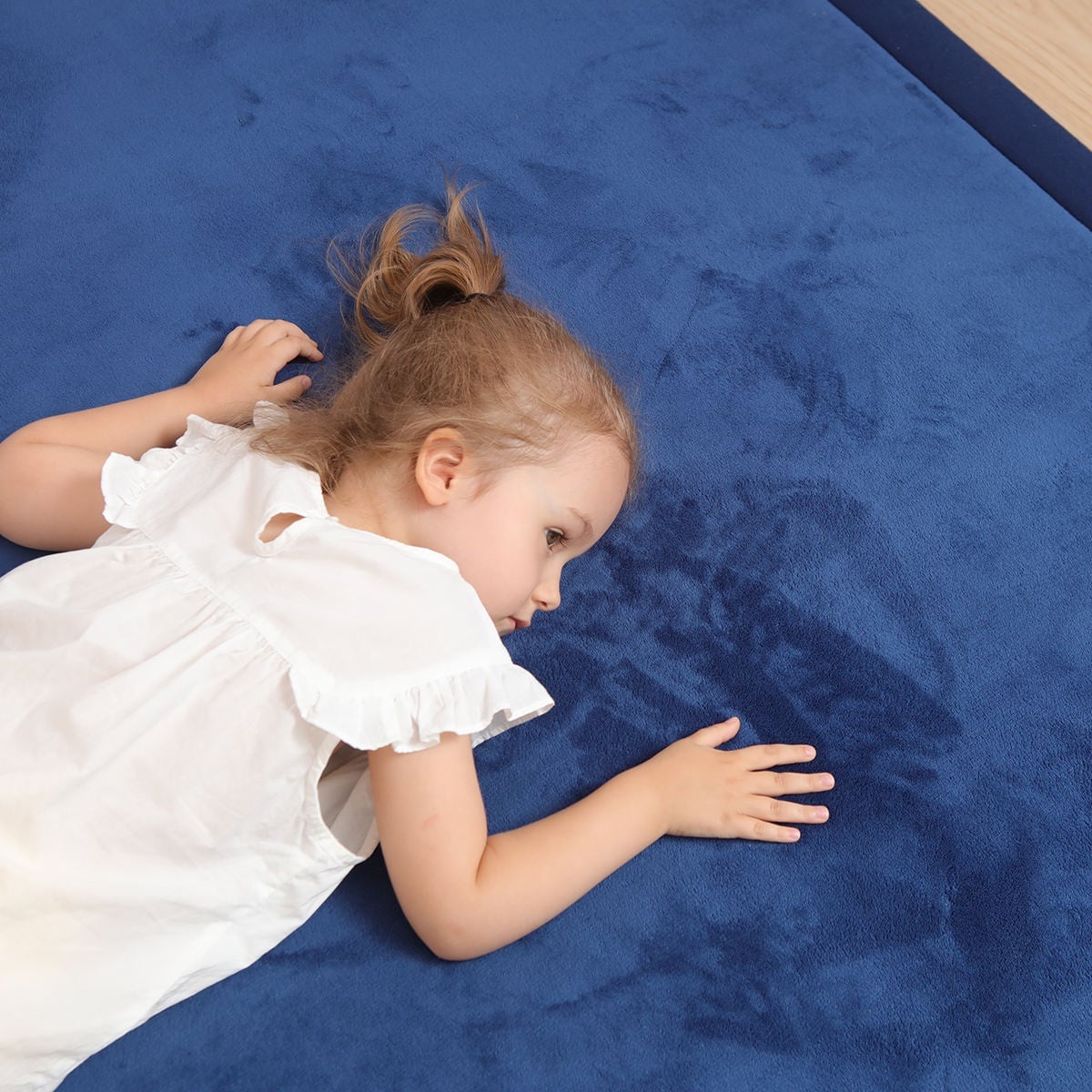
The process of customizing play mats for babies involves multiple decision points, from material selection through finishing touches. Manufacturers must balance parent preferences for comfort and safety with retailer demands for visual appeal and durability. This guide explores the practical pathways for customizing play mats for babies, addressing material composition, design elements, safety certifications, and production considerations that shape final products.
The foundation of any quality play mat lies in its foam core. Manufacturers can customize play mats for babies by selecting specific foam densities, thicknesses, and chemical compositions based on intended use and target market. High-density foam provides superior support and durability, while lower-density options reduce weight for portability. Customization here includes choosing between closed-cell foam, open-cell foam, or hybrid structures that balance cushioning with breathability, ensuring play mats for babies meet both comfort and developmental needs.
The topmost layer directly contacts baby skin, making surface material selection crucial for customization. Manufacturers can apply various finishes to play mats for babies including soft velvet fabrics, cotton blends, waterproof membranes, or rubberized coatings. Each material option affects tactile experience, cleaning ease, and durability. Customization extends to textile weight, thread count, and fiber composition, allowing manufacturers to deliver play mats that align with specific brand positioning and customer expectations for sensory engagement.
Visual customization drives significant market differentiation in play mats for babies. Manufacturers can develop custom color palettes, ranging from soft pastels to vibrant primaries, matching brand identity or seasonal collections. Pattern options include geometric shapes, animal motifs, nature scenes, or abstract designs that support visual development while appealing to parental preferences. Advanced printing technologies allow manufacturers to create highly detailed, fade-resistant designs on play mats for babies without compromising safety or material integrity.
Beyond standard rectangular formats, manufacturers customize play mats for babies into specialized shapes suited to different spaces and uses. Customization options include round mats for smaller rooms, interlocking tile systems for larger floor coverage, and uniquely contoured edges designed for specific furniture arrangements. Size customization ranges from compact portable options to expansive play surfaces, with manufacturers adjusting dimensions to meet exact specifications while maintaining structural integrity and safety compliance in play mats for babies.
Customizing play mats for babies requires embedded safety at every stage. Manufacturers must integrate compliance with international standards including CPSC regulations, ASTM specifications, and local safety requirements directly into production processes. Customization includes selecting certified materials, applying non-toxic treatments, and implementing testing protocols specific to target markets. This ensures play mats for babies meet rigorous safety thresholds while maintaining design flexibility, protecting both infants and brand reputation through documented compliance.
Manufacturers enhance safety by customizing edge construction and stability elements in play mats for babies. Options include reinforced hemmed edges, rolled borders for collision protection, and non-slip base treatments that prevent accidental movement. Customization extends to corner design, padding intensity, and attachment methods for any portable carry handles. These modifications transform standard play mats for babies into safer, more stable play environments while maintaining aesthetic appeal and accommodating specific use cases like placement near stairs or furniture.
Effective customization requires balancing production flexibility with economic viability. Manufacturers evaluate minimum order quantities, tooling investments, and setup times required for customizing play mats for babies at various scales. Strategic customization focuses on high-impact features that justify production complexity, such as unique color combinations or proprietary foam formulations, while maintaining standardized base components. This approach allows manufacturers to offer meaningful customization without excessive cost premiums on play mats for babies.
Customizing play mats for babies introduces additional quality checkpoints throughout production. Manufacturers must implement testing protocols for custom materials, verify pattern accuracy, confirm compliance certification for modified designs, and validate durability of customized components. Realistic project timelines account for sample approval, design refinement, and regulatory validation, ensuring customers receive play mats for babies that meet specifications consistently. Established quality systems reduce delays and rework while maintaining customization integrity.
Color and pattern customization offer excellent value because they leverage existing production infrastructure while delivering significant visual differentiation. Fabric selection and foam density modifications also provide meaningful customization without proportionally increasing costs. Minimizing shape complexity and maintaining standard edge treatments keeps expenses manageable while delivering customized play mats for babies that satisfy market demands.
Safety regulations require that any customized components in play mats for babies maintain compliance with applicable standards. Manufacturers must test modified materials, verify non-toxic formulations, and document compliance for custom designs. Regulatory considerations constrain certain customization directions but also create opportunities for premium positioning through certified, enhanced-safety play mats for babies that exceed basic requirements.
Standard timelines for customizing play mats for babies typically range from 4 to 8 weeks, accounting for design approval, tooling setup, sample production, and compliance testing. Complex customizations involving novel materials or proprietary designs may extend timelines to 10 to 12 weeks. Early communication about specifications and realistic scheduling helps manufacturers deliver customized play mats for babies efficiently while maintaining quality standards.

2026/11/02
Struggling to choose the right living room rugs? Avoid costly mistakes with expert insights on size, material, durability, style & care. Get your perfect rug.

2026/11/03
Worried about infant falls during crawling? Discover how cushioned baby play mats absorb impact, and support motor development. Get expert safety tips now.

2026/11/04
Struggling with messy spills and tummy time needs? Discover waterproof, sensory, and tummy-time-optimized play mat surface. Compare materials now.

2026/11/05
Can a kids play mat reduce noise? Discover how thickness, foam density & full coverage deliver real acoustic relief. Get the guide.

2026/11/06
Why do kids slip on tile, laminate & polished wood? Discover how premium non-slip play mats anchor securely AND absorb impact. Boost safety.

2026/11/09
Tired of scrubbing stains and battling odors? Discover the 5 key kids play mat features—waterproof surfaces, washable covers, non-slip grip. See what makes maintenance effortless.

