 EN

What Should Buyers Know Before Ordering Living Room Rugs?
2026/11/02
Struggling to choose the right living room rugs? Avoid costly mistakes with expert insights on size, material, durability, style & care. Get your perfect rug.
Hard floors present a common challenge for parents and caregivers managing active toddlers and infants. When a child plays in a playpen on tile, wood, or laminate surfaces, every movement creates noise that reverberates throughout the home. A playpen mat directly addresses this acoustic issue by absorbing impact sounds and dampening vibrations that would otherwise travel through hard flooring materials.
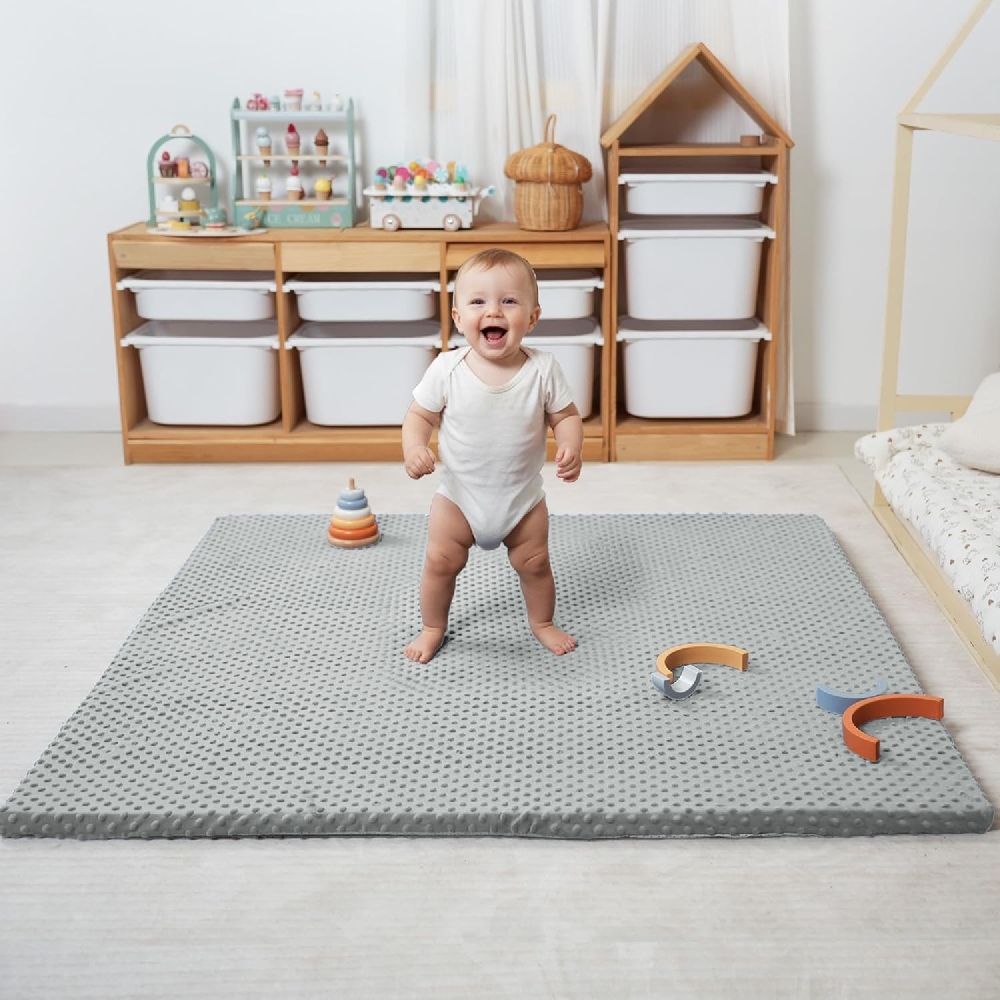
The acoustic performance of a quality playpen mat depends on its thickness, material composition, and the type of cushioned playpen base underneath. Foam-based designs and minky fabrics create an effective sound barrier between the playpen structure and your flooring, reducing noise pollution significantly while also providing comfort and safety for your child. Understanding how these mats work helps you select the right solution for your home environment.
Hard flooring materials like wood, tile, and laminate are excellent sound conductors. When a child jumps, crawls, or moves toys inside a playpen, the vibrations travel directly through the playpen frame into the floor beneath, amplifying even minor movements into noticeable noise. A cushioned playpen base acts as an acoustic buffer, trapping and absorbing these vibrations before they can transfer to your home's structure.
The thickness and density of the mat material determine how effectively it absorbs sound energy. Thicker mats with closed-cell foam or high-density padding provide superior noise reduction compared to thin, single-layer alternatives. A properly chosen playpen mat can reduce noise levels by 40 to 60 percent, creating a noticeably quieter environment in your living space.
Different materials offer varying levels of sound dampening. Minky fabric combined with cushioned foam creates both comfort and acoustic performance, while latex-based padding delivers firm support without sacrificing noise reduction. The wipe-clean play mat option adds practical value for parents dealing with spills and accidents, since traditional cloth surfaces can trap moisture and deteriorate acoustic performance over time.
Closed-cell foam remains one of the most effective acoustic materials for playpens, as its structure prevents air passage and sound wave propagation. Breathable yet dense materials ensure your child stays comfortable while noise suppression remains effective throughout daily use and across different seasons.
The effectiveness of noise reduction correlates directly with playpen mat size and coverage area. A mat that extends beyond the playpen's footprint provides additional sound absorption for the surrounding floor, creating a wider acoustic zone. Standard playpen mat sizes range from 36 by 36 inches for portable models to 40 by 40 inches or larger for full-size stationary pens, though custom dimensions are also available.
Selecting a playpen mat size that matches your floor plan ensures optimal noise reduction performance. If you have a 36-inch playpen, a mat of equal or slightly larger dimensions will adequately dampen vibrations from normal play activity. For high-energy environments where children jump frequently, opting for a larger playpen mat size extends the acoustic benefit to areas where toys are placed or where parents stand nearby, reducing overall noise pollution throughout the room.
Proper placement of your playpen mat amplifies its noise-reducing benefits. Position the mat so the playpen sits centered on it, with even coverage on all sides. This symmetrical placement ensures vibrations dissipate uniformly rather than concentrating in one direction, improving acoustic performance across your hard floors.
Some households benefit from using multiple mats or selecting a wipe-clean play mat larger than the playpen itself to create an extended comfort and safety zone. This approach also provides secondary benefits like easier toy containment and cleaner surrounding floor areas, while simultaneously enhancing acoustic properties of the play space.
A quality cushioned playpen base protects your child from hard floor impact, reducing injury risk during falls and active play sessions. The wipe-clean play mat feature addresses a major parental concern, allowing quick cleanup of spills, food residue, and accidental messes without requiring deep cleaning or replacement. This practical durability extends the useful life of your playpen setup while maintaining hygiene standards in your home.
Non-slip playpen mat designs prevent shifting and sliding, keeping your playpen stable and secure on hard flooring materials. This stability feature is essential for preventing accidents and ensuring the mat stays positioned correctly to deliver consistent noise reduction performance over months of regular use.
Investing in a durable playpen mat reduces the need for frequent replacements and delivers consistent acoustic performance over extended periods. Wipe-clean play mat options simplify maintenance routines compared to absorbent fabric designs that require washing or dry cleaning. The combination of noise reduction, comfort, and easy maintenance makes a quality playpen mat a practical addition to any home with young children.
Regular maintenance of your cushioned playpen base involves simple wiping or vacuuming, tasks that preserve the mat's acoustic properties and appearance. Many families find that this low-maintenance approach, combined with the significant noise reduction benefits, justifies the initial investment in a quality playpen mat solution.
While not all playpens require a mat, adding one significantly improves noise control on hard flooring. Standard playpen pads provide a basic cushioned layer, but specialized options offering greater thickness and acoustic material composition deliver superior noise reduction performance. If noise is a concern in your household, selecting a playpen mat specifically designed for sound dampening is more effective than relying on a basic pad included with your playpen.
Most acoustic experts recommend a playpen mat thickness between one and two inches for adequate noise reduction on hard floors. A cushioned playpen base of this thickness effectively absorbs impact sounds from typical play activity. Thinner mats below one inch provide minimal noise reduction, while mats thicker than two inches may reduce mobility and comfort without delivering proportionally greater acoustic benefits.
Yes, modern wipe-clean play mat designs with dense foam composition perform comparably to traditional fabric options in terms of noise reduction. The material composition and thickness matter more than surface treatment, so a quality wipe-clean mat with appropriate foam density delivers excellent acoustic performance while offering superior maintenance and hygiene advantages for busy households.

2026/11/02
Struggling to choose the right living room rugs? Avoid costly mistakes with expert insights on size, material, durability, style & care. Get your perfect rug.

2026/11/03
Worried about infant falls during crawling? Discover how cushioned baby play mats absorb impact, and support motor development. Get expert safety tips now.

2026/11/04
Struggling with messy spills and tummy time needs? Discover waterproof, sensory, and tummy-time-optimized play mat surface. Compare materials now.

2026/11/05
Can a kids play mat reduce noise? Discover how thickness, foam density & full coverage deliver real acoustic relief. Get the guide.

2026/11/06
Why do kids slip on tile, laminate & polished wood? Discover how premium non-slip play mats anchor securely AND absorb impact. Boost safety.

2026/11/09
Tired of scrubbing stains and battling odors? Discover the 5 key kids play mat features—waterproof surfaces, washable covers, non-slip grip. See what makes maintenance effortless.

